Understanding Ehlers-Danlos Syndrome doesn't have to be complicated
Discover a clear, practical framework for recognizing, diagnosing, and managing Ehlers-Danlos Syndrome, based on the approach we use in clinical practice and ongoing research.
Join the course without obligation until 31st August 2026
Thereafter, patients and study participants will continue to have free access while everyone else may join at a cost of US$187.00
Access the course through your Google Chrome browser for best results
Copy and past this link into the Google Chrome browser:
https://courses.ezyeds.com/offers/sREkoWXa
What You’ll Gain
A practical understanding of joint hypermobility and systemic features
Guidance on classification of EDS and hypermobility spectrum disorders
Real-world approaches to clinical assessment and management
-
Patients & families
- This course is for you if you:
- Have been diagnosed with hEDS, another EDS type, or HSD
- Suspect you may have Ehlers-Danlos syndrome or a hypermobility-related condition
- Feel confused by medical terminology or mixed information online
- Want a clear explanation of what your diagnosis means in everyday life
- Are looking for practical self-care and symptom management strategies
- Want to better understand how to talk with your healthcare providers about EDS and hypermobility
Healthcare professionals
This course is for you if you:
- See patients with complex pain, fatigue, or suspected hypermobility
- Want a clearer framework for recognising and assessing joint hypermobility
- Need to understand how hEDS and HSD are classified and distinguished from rarer EDS types
- Are unsure when and how to diagnose or label EDS vs HSD vs other conditions
- Want practical guidance on management approaches and self-care advice you can safely share
- Prefer information that is evidence-informed, clinically realistic, and clearly explained
Why learn about EDS here?
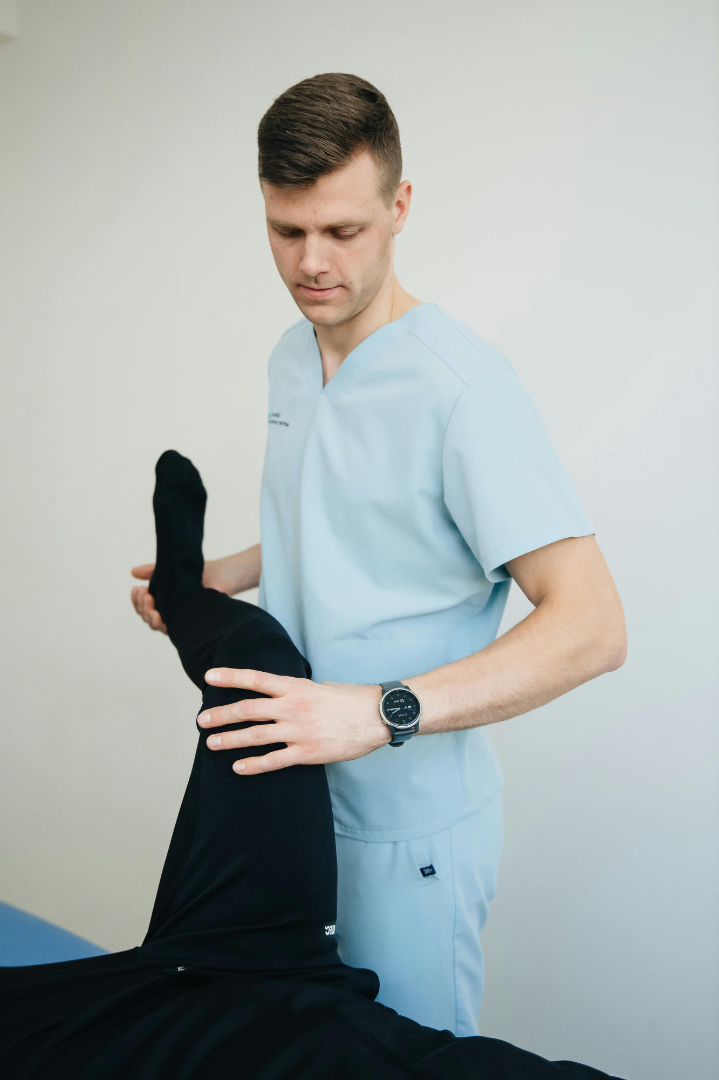
The Approach Behind EZyEDS
This course is built on active clinical practice and research experience in assessing joint hypermobility and its associated systemic features.
Rather than presenting Ehlers-Danlos Syndrome as a vague or mysterious condition, the course:
-
Breaks down complex diagnostic criteria into clear, understandable concepts
-
Focuses on what is supported by current evidence and clinical practice
-
Acknowledges areas of uncertainty and ongoing research where they exist
Through this approach, you will gain:
-
A coherent framework that connects joint findings and systemic features
-
Practical guidance focused on real-world clinical decision-making and patient care
-
Insights aligned with ongoing research exploring these conditions in greater depth
Course Creators
The EZyEDS course was developed by Drs. Regan and Germaine Arendse.
Dr. Regan Arendse is a Fellow of the Royal College of Physicians of Canada with certification in Rheumatology and over 15 years of clinical experience treating patients with Ehlers-Danlos Syndrome in Saskatoon, Saskatchewan.
Dr. Germaine Arendse holds a PhD in Microbiology and Immunology from the University of Saskatchewan and has extensive experience in clinical research and teaching.

Which healthcare professionals is the EZyEDS course intended for?
-
Primary care physicians and nurse practitioners
-
Rheumatologists, physiatrists, and other medical specialists
-
Physiotherapists and occupational therapists
-
Psychologists and social workers
-
Chiropractors and naturopathic practitioners
You’ll learn how to:
- Recognize and assess joint hypermobility
- Understand the relevance of systemic features
- Classify patients into appropriate diagnostic categories
- Make informed decisions about management, referrals, and patient education
What You’ll Learn in the EZyEDS:
Ehlers-Danlos Made Easy...

MODULE 0
Introduction to EZyEDS
This course is designed to be self-paced, allowing you to progress through the material by watching each video at a time that suits your schedule.
In this introductory module, you will learn:
-
How to use the course and navigate the learning materials
-
Who the course is designed for, including patients, families, and healthcare professionals
-
How clinicians and people living with joint hypermobility can learn together using a shared framework and language
By the end of this course, you will have gained a clear, practical overview of the joint hypermobility syndromes and their associated systemic features as they commonly present in adults, along with an understanding of the principles used to assess, classify, and manage these conditions.

MODULE 1
Overview of the Management of Joint Hypermobility
This module provides a high-level overview of the management of the systemic features associated with joint hypermobility.
The exact reasons why some individuals with joint hypermobility develop these systemic features are not yet fully understood. For this reason, it is important to approach these presentations using the principles applied to medical conditions with an uncertain underlying cause.
In this module, you will gain insight into:
-
The principles of managing a medical condition with an uncertain underlying cause
-
A step-by-step overview of assessing and managing the systemic features associated with joint hypermobility
-
The importance of excluding inflammatory, autoimmune, degenerative, and known genetic conditions that may present with joint pain and or hypermobility
By the end of this module, you will have a clear understanding of the broad principles used in the assessment and management of the systemic features associated with joint hypermobility.

MODULE 2
Measuring Joint Hypermobility
Once you have gained a broad overview of the systemic features associated with joint hypermobility and have considered important differential diagnoses, you will be ready to learn how joint hypermobility can be assessed in clinical practice.
This module provides:
-
An overview of clinical assessment tools, including the Beighton Score and related measures
-
Practical considerations and limitations when measuring joint hypermobility
-
Guidance on interpreting assessment findings within the appropriate clinical context
By the end of this module, you will understand the practical application of the Beighton Score, its limitations, and how to extend your joint hypermobility assessment to ensure that hypermobility in joints not included in the Beighton Score is not overlooked.

MODULE 3
Understanding the Systemic Features of Joint Hypermobility
While joint hypermobility provides entry into the spectrum of hypermobility-related conditions, it is the systemic features that help determine the specific classification of the various forms of Ehlers-Danlos Syndrome.
In this module, you will learn:
-
The difference between objective (“tangible”) and subjective (“non-tangible”) systemic features commonly associated with joint hypermobility
-
How the identification of these systemic features contributes to the classification of the different forms of Ehlers-Danlos Syndrome
-
How to assess systemic features in a clinically relevant and practical manner
By the end of this module, you will have a practical framework for identifying and assessing the systemic features associated with joint hypermobility and understanding how these features contribute to the classification of the various forms of Ehlers-Danlos Syndrome.
MODULE 4
Classification and Diagnostic Categories
Accurately classifying a patient with a specific form of Ehlers-Danlos Syndrome (EDS) or a Hypermobility Spectrum Disorder (HSD) is essential for guiding appropriate genetic testing, clinical evaluation, and management.
In this module, you will learn the practical steps involved in classifying patients with joint hypermobility–related conditions, including:
-
An overview of the forms of Ehlers-Danlos Syndrome commonly recognised in adults
-
How to recognise the rarer forms of EDS, including classical, classical-like, cardiac-valvular, and vascular EDS
-
How to differentiate hypermobile EDS (hEDS) from the Hypermobility Spectrum Disorders (HSD)
-
Practical guidance for navigating incomplete or evolving diagnostic presentations
By the end of this module, you will have a clear and practical understanding of how to confidently classify patients with EDS or HSD and apply this knowledge in clinical practice.

MODULE 5
Management Principles for Clinicians
Once a patient with joint hypermobility has been accurately classified as having a specific form of Ehlers-Danlos Syndrome (EDS) or a Hypermobility Spectrum Disorder (HSD), you will be in a position to discuss an appropriate management plan with your patient.
In this module, you will learn practical steps to help formulate a management plan tailored to your patient’s individual needs, including:
-
Core principles of management and multidisciplinary care
-
When referral for specialist evaluation or genetic testing may be appropriate
-
How to communicate effectively with patients about prognosis, uncertainty, and self-management
-
Understanding risk factors associated with systemic features of joint hypermobility
-
Approaches to addressing complex pain and fatigue in the context of hypermobility
-
How to assess the impact of systemic features on patient function and quality of life
By the end of this module, you will have the confidence to develop a practical, patient-centred management plan for individuals with hEDS, or HSD.

MODULE 6
Self-Care and Living with EDS and the Systemic Features of Joint Hypermobility
At present, there is no definitive treatment for the various forms of Ehlers-Danlos Syndrome (EDS) or the Hypermobility Spectrum Disorders (HSD). Management is therefore primarily directed at addressing the individual systemic features associated with these conditions.
While many of the objective (“tangible”) systemic features may be managed with conventional medical therapies, many of the subjective (“non-tangible”) features require active self-management and lifestyle strategies.
In this module, you will explore practical steps patients can take to help manage these challenges, including:
-
Foundations of self-care, pacing, and symptom management
-
Strategies to support joint stability and everyday physical function
-
Practical approaches to managing pain, fatigue, and symptom flares
-
Psychological and social aspects of living with a chronic connective tissue condition
-
How to collaborate effectively with healthcare providers to support long-term health
By the end of this module, you will have a clear understanding of practical self-care strategies that can help individuals manage many of the subjective systemic features associated with hEDS and HSD.

GET STARTED TODAY!
EZyEDS: Ehlers Danlos made Easy
Is there a cost to enroll in the EZyEDS course or participate in the research study?
Participation in the research study is free of charge for Canadians with reciprocal provincial health coverage.
In addition, participants who complete all components of the research study will be granted complimentary access to the EZyEDS course.
For those who wish to enroll in the course independently, the registration fee is US $197.00, payable only after the course launches.
You may join the launch notification list to be informed when the course becomes available. No payment is required to join the list, and you will only be billed if you proceed with full registration for the EZyEDS course, once it is launched.
Are my results guaranteed?
Can I share course info with a friend?
Do you have any incentives if I refer a friend?
Will the EZyEDS course be updated when the 2026 International EDS criteria are published.
Are CPD points offered for completing the EZyEDS course?
Join the course without obligation until 31st August 2026
Thereafter, patients and study participants will continue to have free access while everyone else may join at a cost of US$187.00
Access the course through your Google Chrome browser for best results
Copy and past this link into the Google Chrome browser:
https://courses.ezyeds.com/offers/sREkoWXa